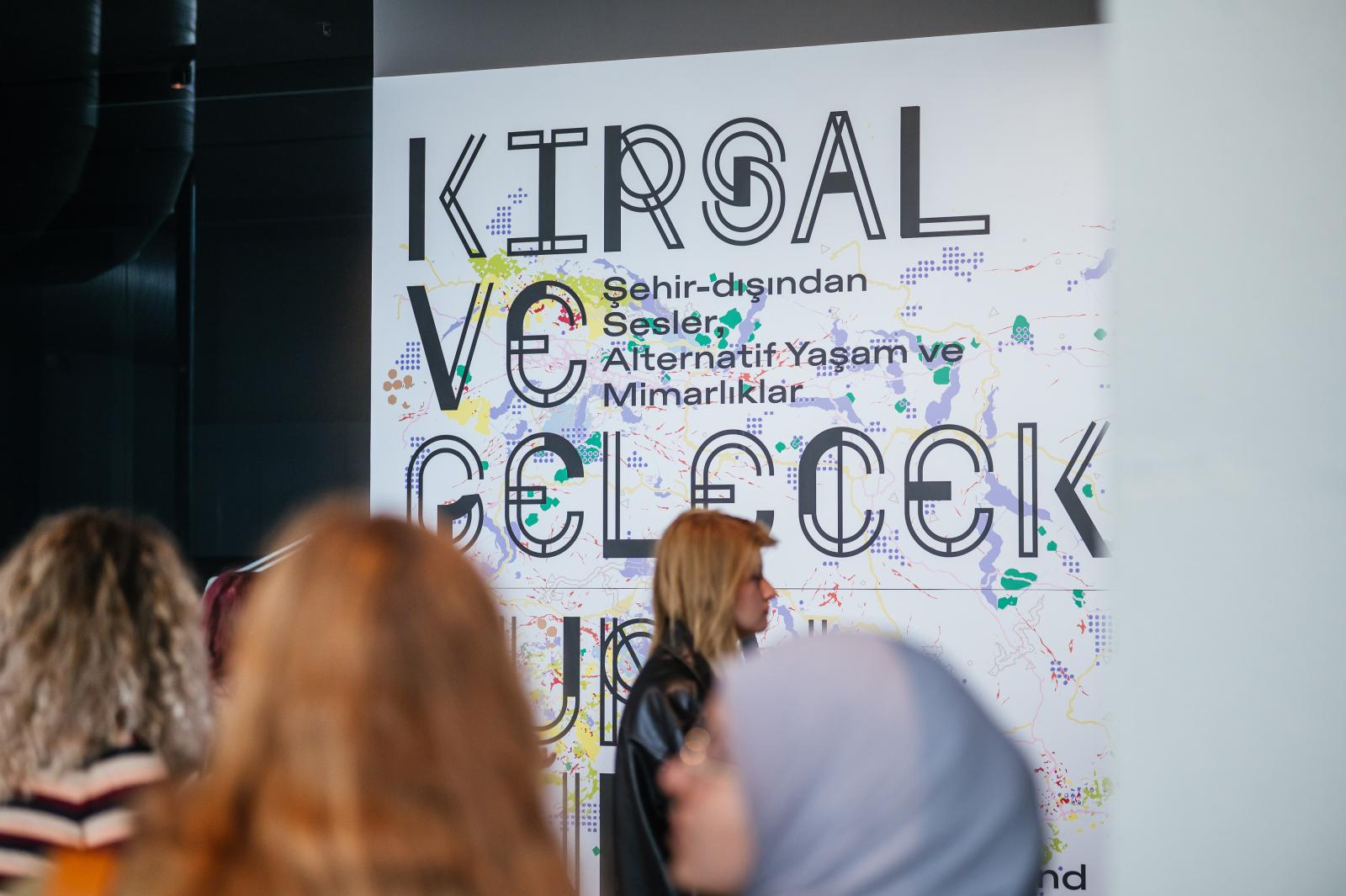
Rural and Future National Forum
September 2026 – September 2027
ARTVIN, ANKARA, BALIKESIR, DENIZLI, ISTANBUL, MERSIN, SANLIURFA, TUNCELI, VAN
Forum: 19–20 November 2026, CerModern, Ankara
Affiliates: Leman Albayrak, Zemzem Taşgüzen Polat, Fatma Şebnem Kuloğlu Yüksel, Türkan Sarp
The Rural and Future National Forum is a forum-workshop that opens up discussions on rural areas as a foundation for imagining new and alternative ways of living in the future. Rural areas are often approached through the lenses of development, investment, conservation, tourism or inventory-making. Moving beyond these established frameworks, the Forum proposes understanding the rural as a living environment shaped by the interconnected dynamics of water, land, energy, production networks and everyday life, as well as relationships across different scales. This perspective approaches the rural as a “new shared space for all human and non-human, living and non-living beings.”
The Forum builds on the Rural and Future studio and research programme conducted at the Faculty of Architecture at Istanbul Technical University (ITU) between 2020 and 2024. Over eight semesters, the studio carried out design research in eight different geographies: Şile, Bandırma, the Menderes Basin, Harran, the Çoruh Basin, the Taurus Mountains, the Upper Euphrates Basin and Lake Van. These studies were complemented by fieldwork and local collaborations.
Accompanying the closing event of the Rural and Future Public Programme in Ankara, the Forum takes as its starting point an understanding of the rural as a “new shared space for all human and non-human, living and non-living beings.” Parallel discussion tables, each focusing on one of the eight geographies, will bring together artists, local government representatives, civil society organisations, professional chambers and academia. The discussions will be documented through video, audio and photography, and developed into open-access reports, a Forum Declaration and a moving image archive. These outputs will be shared through gatherings in eight cities and made publicly accessible through a digital open archive.